


From AI Answers to AI Action: Agentic AI in Manufacturing Operations
AI is getting better at answering questions. But in manufacturing, answering a question is only the beginning. The real promise of agentic AI in manufacturing is connecting AI to the systems where operational work actually happens.

Moving From AI That Answers to AI That Acts
Most enterprise AI experiences are essentially one-way: You ask a question, AI generates an answer. You take that answer and do something with it. That model breaks down in manufacturing, where the information needed to make a decision is distributed across multiple systems.
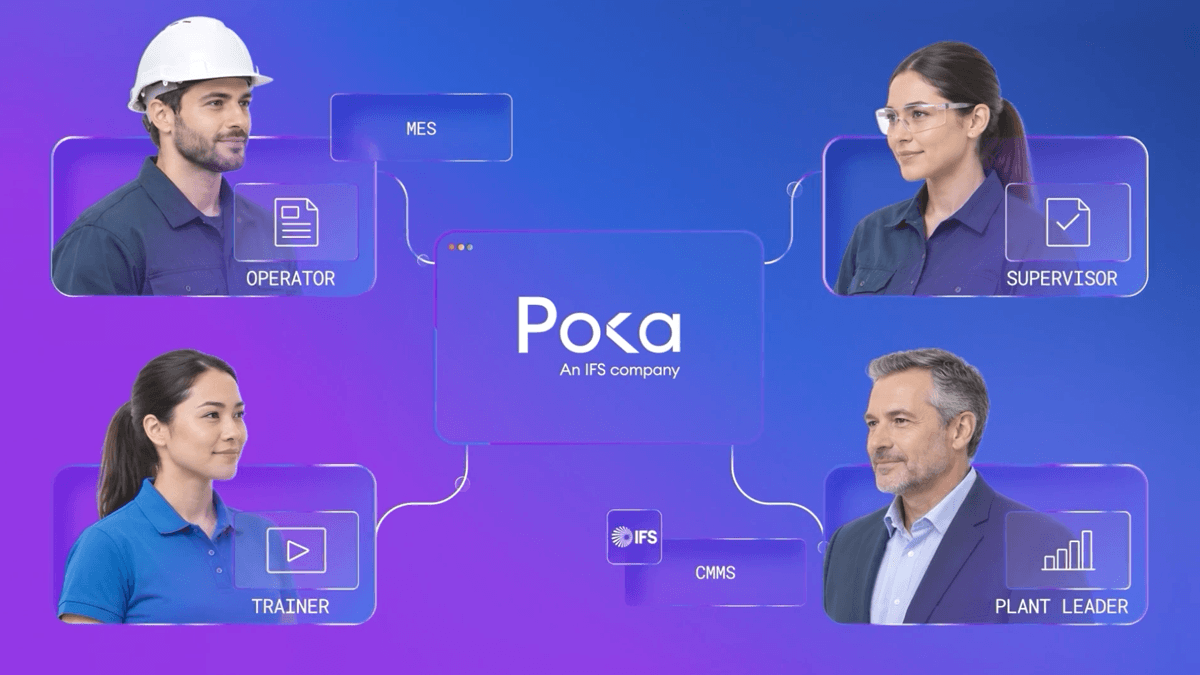
A maintenance technician might need:
- A work instruction in Poka
- Equipment history in the CMMS
- Production context from the MES
- Inventory information from the ERP
- A machine condition from SCADA
- The right permissions and approval process before anything changes
The challenge isn't simply giving AI access to more information. It's connecting that information to the work being performed.
Poka's MCP architecture is designed to create that connection. ERP becomes a knowledge source; MES becomes a decision input; SCADA can become an action target. And Poka provides the operational context that connects those systems to the people doing the work.
AI Agents and Manufacturing Operations: A Two-Way Connection

AI can read from the operation
Poka's AI agents can access the operational context they need from connected systems, rather than relying only on information stored in Poka.
What It Looks Like
An agent could combine work instruction + equipment history + current production context + relevant operational data to give a worker a more complete answer than any individual system could provide.
Instead of:
“What does this work instruction say?”
The worker can ask:
“This equipment is showing this condition. What does the procedure recommend, and have we seen this issue before?”
AI can bring the relevant information together and provide a source-backed response grounded in the organization's operational knowledge.

AI can write back to the systems running the work
Poka’s AI agents can interact with enterprise systems to help execute workflows, including creating or updating records in systems such as MES, CMMS, and ERP.
What It Looks Like
Actions can be configured with human approval and are logged for review, so the interaction can move from Ask → Answer to Understand → Recommend → Act.
Before Industrial AI:
A technician discovers a recurring equipment problem. They search for the procedure, investigate the issue, look up previous incidents, determine whether a work order already exists, and enter the relevant information into the appropriate system.
With Industrial AI:
The agent finds the relevant procedure, reviews available operational context, identifies a likely issue, checks the history, prepares the work order, and routes the proposed action for approval.
MCP Integration: Where AI Agents Meet the Manufacturing Tech Stack
MCP integration gives Poka's industrial AI agents a way to work across the technology that already runs your operation.
Poka
Work instructions, troubleshooting knowledge, skills, issues, execution history and frontline context

Industrial AI agents
Understand context, reason across information, recommend actions and execute approved workflows
Enterprise and plant systems
and other operational systems
Manufacturers don't need another isolated AI application; they need AI that can work with the systems they've already invested in.
Poka's MCP approach connects agents to that existing technology stack without turning every AI agent integration into a new custom project.
The AI Agent Workflow: Closing the Loop Between Insight and Action
This is where Industrial AI starts to look less like a chatbot and more like a digital co-worker.
| Stage | What AI Does |
|---|---|
| Knowledge | Finds the right procedure, document, or operational knowledge |
| Context | Combines that knowledge with current and historical operational data |
| Reasoning | Helps determine what the situation means and what should happen next |
| Action | Creates, updates, or triggers work in connected systems |
| Governance | Keeps permissions, approvals, and auditability in the loop |
Poka's approach combines connectivity with the controls required for industrial environments. Agents can be grounded in authorized Poka content, operate within role-based permissions, use approval gates for consequential actions, and maintain an audit trail.
Why that combination matters: An AI agent that can take action without context or governance creates risk. An AI agent that has context but cannot act creates another information silo. Industrial AI needs both.
From Connected Workers to Connected Operations
Connected work technology has always been about bringing information closer to the people doing the work. Industrial AI takes that idea further.
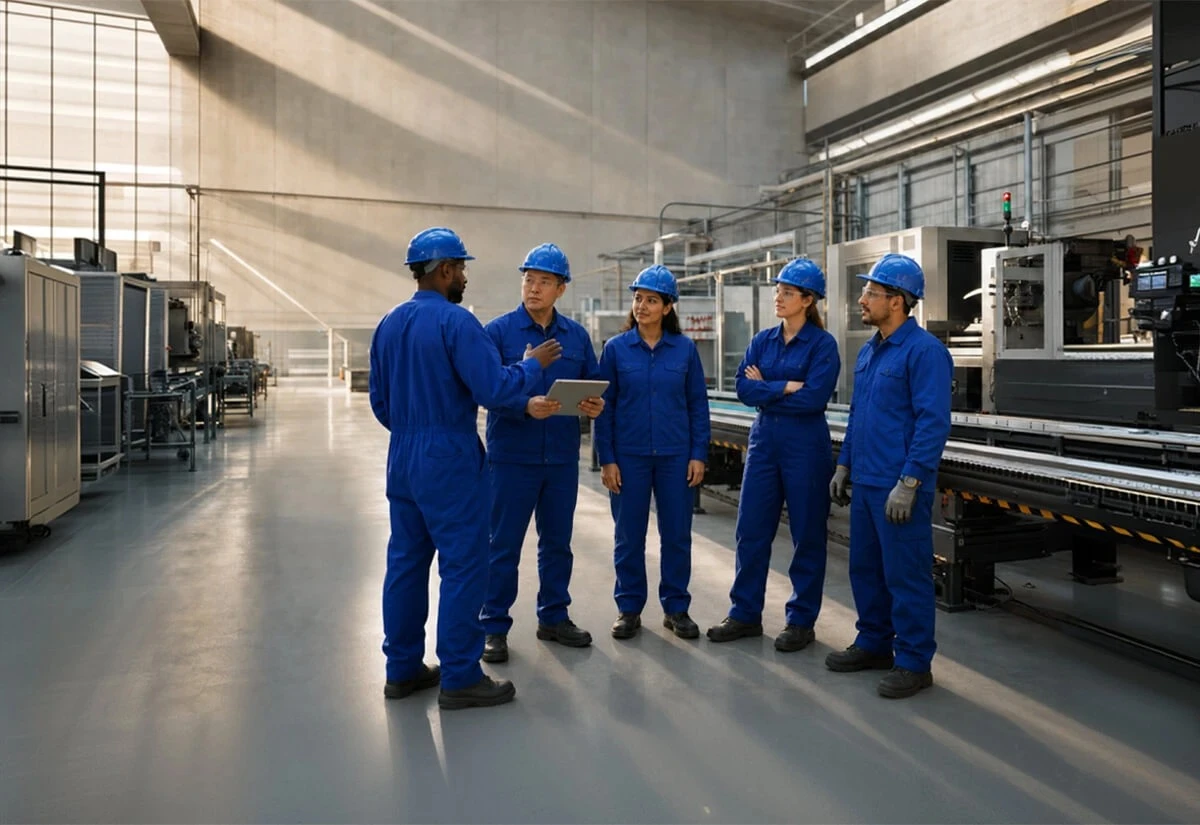
The next generation isn't simply about giving workers better access to information. It's about connecting people, AI, and systems in a continuous operational loop.
- A worker reports a problem.
- AI gathers the context.
- The agent identifies the relevant knowledge.
- Connected systems provide additional information.
- The agent recommends what to do.
- A human approves the action when required.
- The appropriate system is updated.
- The result becomes part of the operational record.
This is the direction agentic AI in manufacturing is heading: not AI replacing the frontline, but AI becoming an active, governed participant in the work.
Poka combines a connected work platform, operational knowledge, Industrial AI agents, and AI-native integrations in one environment. With MCP, those agents can connect frontline intelligence with the enterprise and plant systems that run the operation.
The result is Industrial AI that can understand the work, work across the systems behind it, and help move the operation forward.
Frequently Asked Questions
Enterprise AI assistants are increasingly capable of working with business data and applications. The challenge in industrial environments is giving those assistants access to the operational context, permissions, workflows, and systems that govern frontline work.
Poka connects those AI experiences to the operational knowledge and systems behind the work, so an enterprise AI assistant can retrieve information from Poka, while Poka’s agents can work with connected enterprise and plant systems.
Make every shift your best shift with Poka AI
AI assistants embedded in the flow of work drive a 14% average productivity gain, and 35% for newer workers.
- AI assistants embedded in the flow of work
- 77% reduction in work instruction creation time
- Create content 77% faster, and scale 630% more
- Make every shift your best shift with AI-powered support
- Proven results, backed by measurable performance data
Poka has quickly become part of our daily operations and is helping to capture best practices in a centralized, easy-to-access knowledge base.
Head of Manufacturing IT