



Industrial AI Applications: A Practical Guide to AI Use Cases in Manufacturing
Traditional approaches to training, knowledge sharing, and problem-solving are becoming harder to scale. Manual SOPs, tacit knowledge, and job shadowing can no longer provide the consistency and accessibility that modern operations require.
Industrial AI offers a new approach: Inserting intelligence directly into the workflows where frontline work happens.

Manufacturers are facing a workforce reality that makes improving frontline performance more urgent than ever. Talent gaps, turnover, an aging workforce, and increasingly complex production environments are widening the gap between frontline skills and the performance required to stay competitive.
Why Frontline Work Needs a New Approach
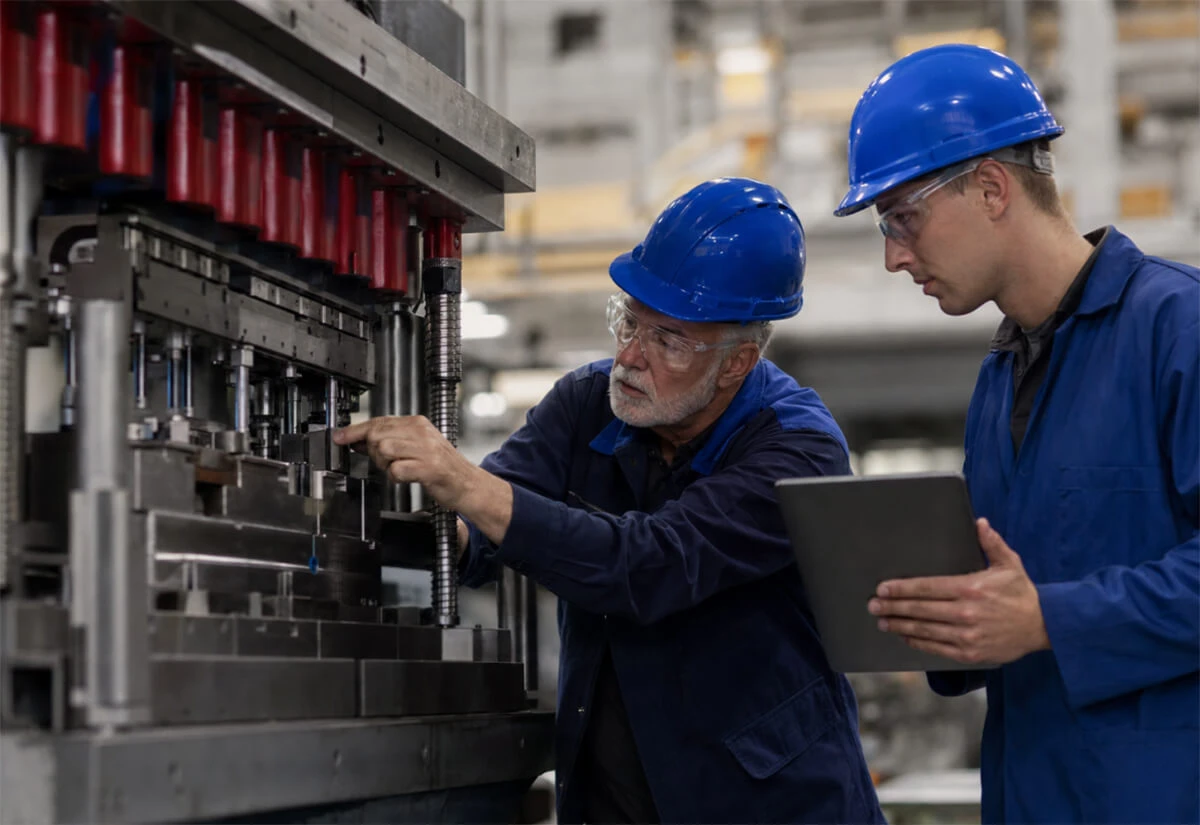
The challenges facing manufacturing aren't simply workforce challenges. They are operational risks.
- When experienced workers leave, valuable knowledge goes with them.
- When onboarding takes too long, productivity suffers.
- When training is inconsistent, or skills are difficult to track, operational standards become harder to maintain.
- When frontline teams can't easily access current procedures or expert guidance, problems take longer to resolve.
The response has long been to add more documentation, more training, or more digital tools. But adding information isn't enough if workers still have to figure out where to find it, how to interpret it, and what to do next.
The next step is making that information intelligent and putting it into the flow of work.
5 Industrial AI Applications That Transform Frontline Work
The most valuable AI applications in manufacturing connect knowledge, workflows and intelligence directly to the people doing the work.
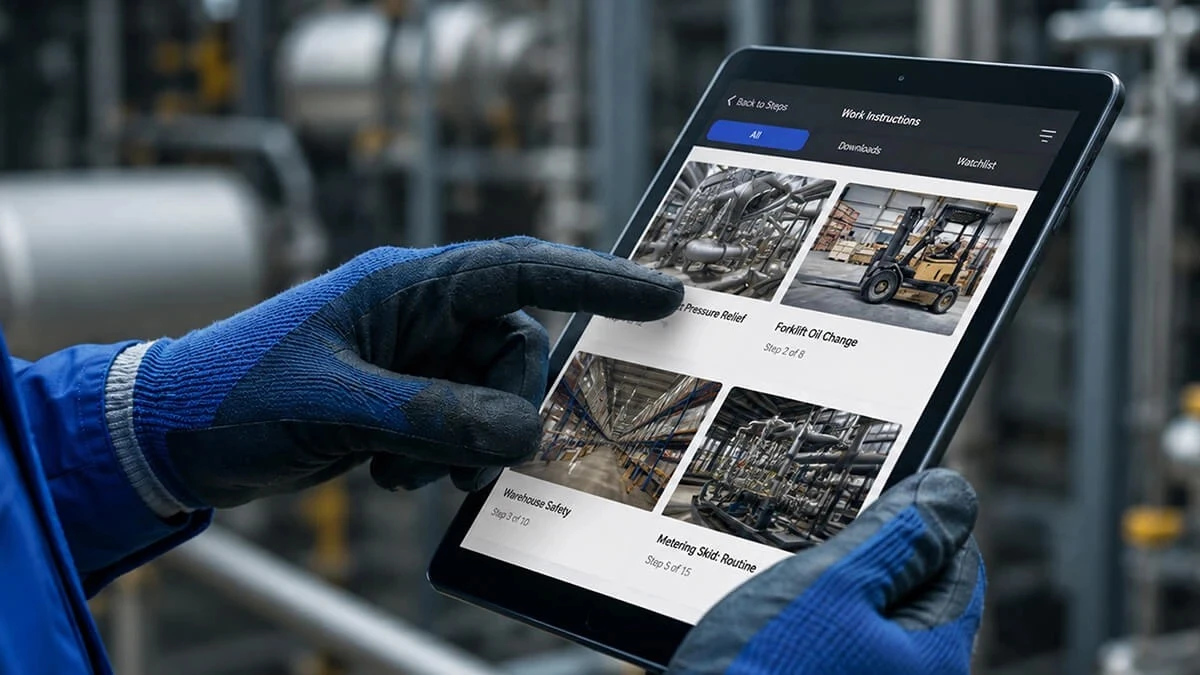
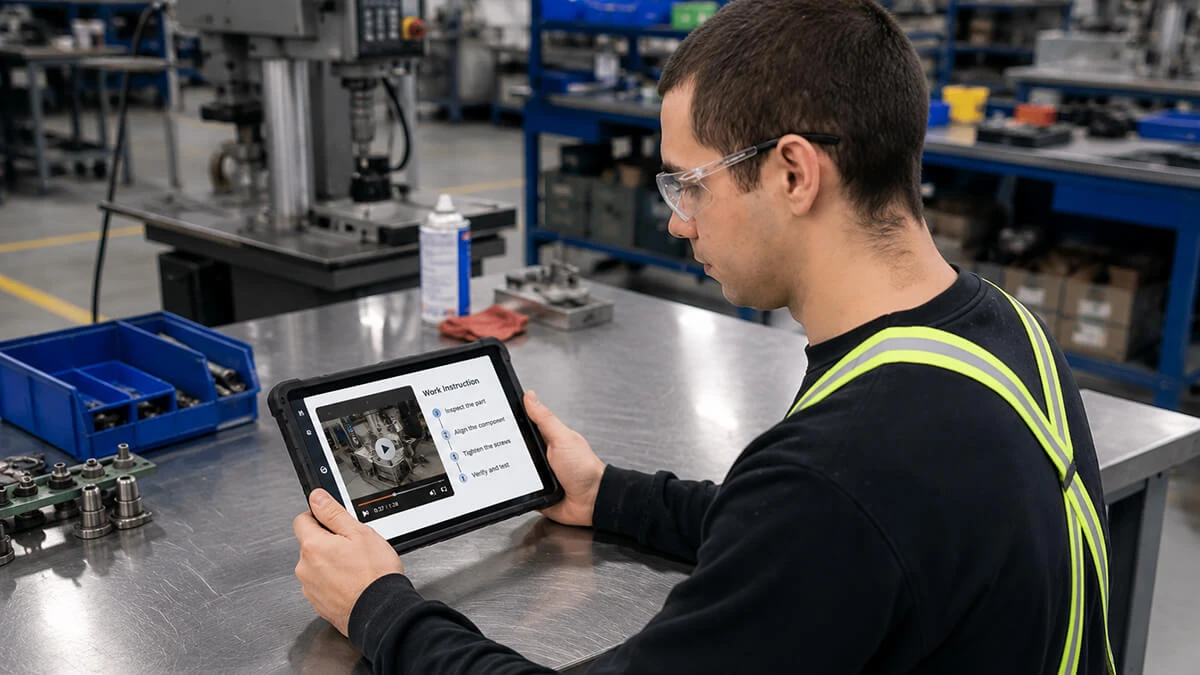
1. Turn Operational Knowledge Into AI Work Instructions
Industrial AI transforms existing knowledge into structured, accessible digital content:
- Converting static SOPs and PDFs into structured AI work instructions
- Turning videos and real-world walkthroughs into step-by-step instructions
- Transforming images and handwritten notes into structured operational content
The result is a stronger foundation for consistent work and faster access to information.
In Poka: AI Knowledge Creation converts PDFs, videos, photos and handwritten notes into digital work instructions, with translation into 37 languages. Poka customers create work instructions 77% faster.
2. Move From Answers to Action
Industrial AI can help frontline teams interpret operational knowledge in context and move from understanding a problem to deciding what to do next.
As AI connects to operational workflows, it can also initiate or update work in the systems where it happens, shifting frontline support from information retrieval to action.
3. Put Intelligence in the Flow of Work
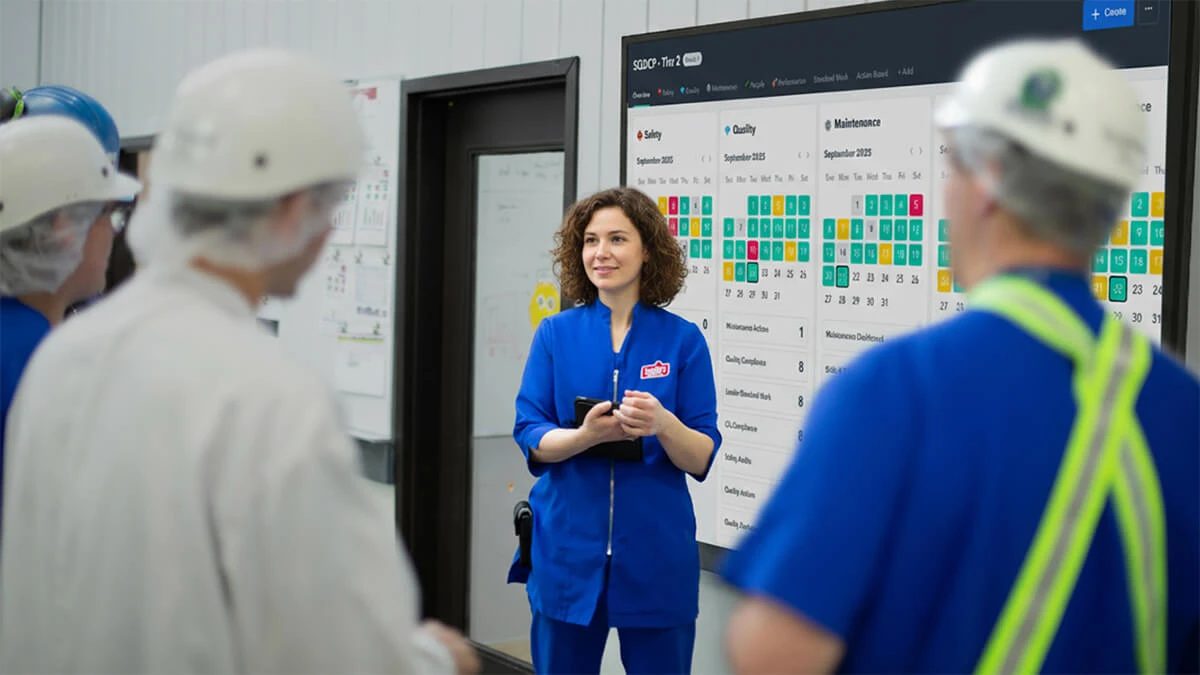
Frontline workers shouldn't need to learn another application just to benefit from AI; they need intelligence in the workflows they already use.
Industrial AI can support frontline teams by helping them:
- Locate relevant operational knowledge
- Work through problems
- Understand operational trends
- Identify issues that need attention
- Access information using natural language
4. Build AI Around Your Operation
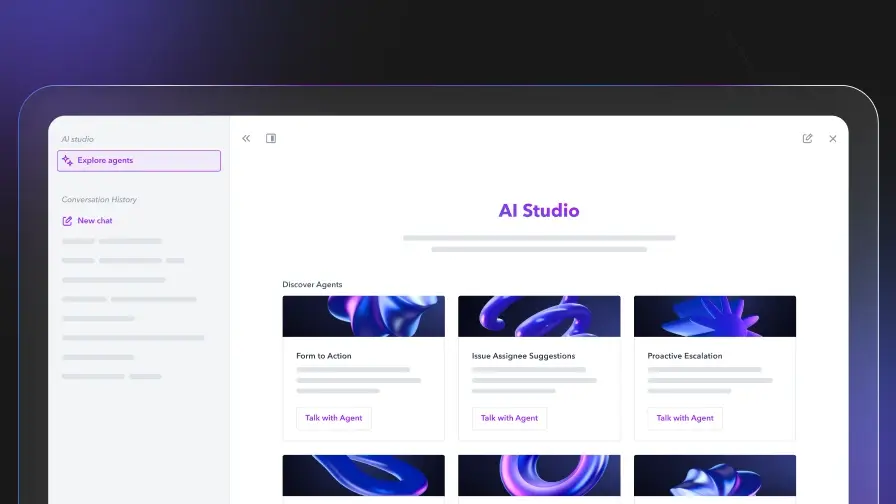
Every operation has its own processes, terminology, workflows, and decision criteria. A generic AI experience cannot account for all of those differences.
Industrial AI lets organizations build intelligence around how their teams actually work. Instead of forcing frontline teams into generic AI experiences, organizations can develop purpose-built capabilities for specific operational needs.
5. Connect AI Agents for Manufacturing Across the Industrial Ecosystem
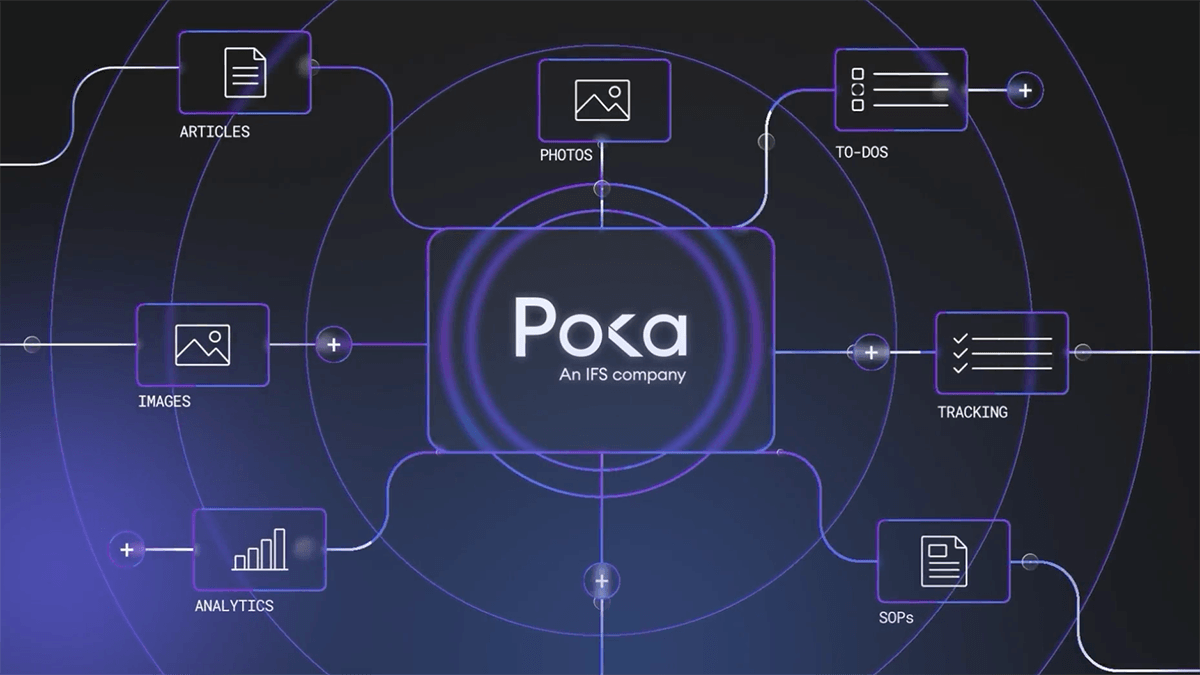
Connecting operational intelligence with the broader technology ecosystem lets information and workflows move between the systems that support production.
The result is a broader industrial AI ecosystem in which operational intelligence can be used where it is needed, rather than remaining locked inside a single application.
How to Get Started With Industrial AI
Organizations don't need to transform their entire operation overnight. Start with the industrial AI use cases that tackle the knowledge, workflows, and challenges that already matter most to frontline teams.
STEP 1
Operational Knowledge
Bring the information frontline teams rely on every day into a centralized, accessible digital environment. This can include SOPs, work instructions, troubleshooting guides, training materials, equipment documentation, and other critical operational content.
STEP 2
Instant Access to Answers
Identify the questions workers regularly need answered. Instead of requiring employees to stop working and search through documents or find an expert, provide a way to ask questions in natural language and receive relevant answers from trusted operational sources.
STEP 3
Augmented Problem-Solving
Look for recurring problems where workers need to interpret a situation, determine what to do next, or work through multiple steps to reach a resolution – these are strong opportunities for AI-powered assistance to give workers contextual guidance and relevant operational knowledge so they can work through problems more efficiently.
STEP 4
Turn Data Into Insight
Identify the operational metrics that teams already monitor but don't always have time to analyze deeply. Industrial AI can review operational data, identify meaningful changes, flag issues that deserve attention, and surface trends across operations.
STEP 5
Extend AI Across the Operation
Once initial use cases are delivering value, organizations can expand into more specialized AI capabilities.
Custom AI agents can be designed around specific operational needs, while connections to the broader technology ecosystem can extend intelligence beyond individual workflows.
The goal isn't to deploy AI everywhere at once. It's to create a foundation that can grow from individual use cases into a broader ecosystem of intelligent, connected work.
From Connected Work to Intelligent Work
Connecting frontline workers to digital tools was an important first step. The next is making those tools intelligent.

Industrial AI for connected work puts operational knowledge, contextual guidance, and AI-powered insights directly into frontline workflows. Instead of simply giving workers another place to find information, it can help them understand what is happening, solve problems, and take action. The result is a frontline workforce that is more informed, capable, and empowered to act.
The path forward is straightforward:
- Connect people to knowledge.
- Put intelligence into the flow of work.
- Use AI to amplify human expertise.
That’s how organizations can move from connected work to a more intelligent, agile, and resilient operation. Explore how Poka’s Industrial AI can help your organization.
Frequently Asked Questions
Make every shift your best shift with Poka AI
AI assistants embedded in the flow of work drive a 14% average productivity gain, and 35% for newer workers.
- AI assistants embedded in the flow of work
- 77% reduction in work instruction creation time
- Create content 77% faster, and scale 630% more
- Make every shift your best shift with AI-powered support
- Proven results, backed by measurable performance data
Poka has quickly become part of our daily operations and is helping to capture best practices in a centralized, easy-to-access knowledge base.
Head of Manufacturing IT