


What Is Industrial AI?
Artificial intelligence is rapidly moving into the workplace. But putting a general-purpose AI model into an industrial environment doesn't automatically make it industrial AI.
The factory floor has different requirements. AI may be helping someone troubleshoot a machine, understand a quality issue, follow a work instruction, or make a production decision. In these environments, an answer isn't useful simply because it sounds intelligent. It needs to be grounded in the right knowledge, delivered in the right context, and governed so people can trust it.
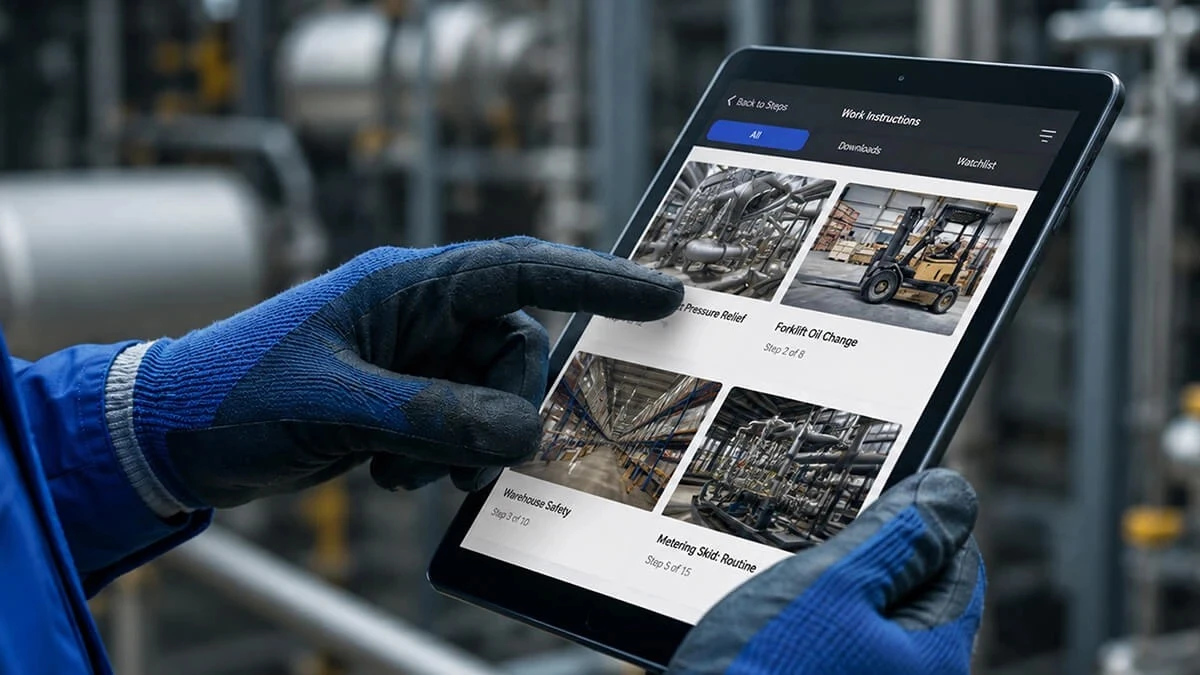
Industrial AI Defined, in Plain English
Industrial AI is AI designed to support and improve work in complex industrial environments by combining operational knowledge, contextual data, intelligent workflows, and governed automation.
In manufacturing, industrial AI is AI plus everything it takes to make that intelligence useful on the factory floor. The goal isn’t another way to chat with an LLM. It’s solving problems faster, making better decisions, retaining critical knowledge, and improving how work gets done.
The Core Four: What Industrial AI Is Built On
For Industrial AI to deliver on its promise, it needs four essential foundations.

1. Grounded in Operational Knowledge
A general-purpose AI model may know a great deal about manufacturing, but it doesn't automatically know your equipment, processes, quality standards, or how you do things. Industrial AI is grounded in operational knowledge, including:
- Standard operating procedures
- Work instructions
- Equipment documentation
- Training materials
- Maintenance knowledge
- Quality procedures
- Troubleshooting history
- Lessons learned
- Institutional knowledge

2. Embedded in the Flow of Work
The best AI for frontline workers doesn't require them to stop working to use it. Industrial AI should be embedded in the workflows people already use:
- Work instructions
- Training
- Troubleshooting
- Daily management
- Problem-solving
- Continuous improvement
- Quality processes
This makes AI more than a standalone destination. It becomes part of how work gets done.

3. Governed and Auditable
When AI supports work that can affect safety, quality, production, or compliance, people need confidence in the information they receive, and organizations need control over how AI is used.
Trusted AI in an industrial setting must include mechanisms for:
- Grounding: Responses based on approved, relevant sources
- Traceability: Users can see where information came from
- Permissions: Respect the access boundaries applied to underlying information
- Auditability: Visibility into how AI is being used
- Human oversight
Trustworthy AI isn't an optional layer you can add after a system is built. It must be part of the system from the beginning.

4. The LLM Is One Ingredient, Not the Product
AI provides powerful capabilities for understanding and generating information. But an LLM alone doesn't know your plant, understand your workflows, enforce your permissions, or decide what actions are appropriate. Industrial AI only works with:
- Operational knowledge
- Contextual data
- AI models
- Workflow
- Integrations
- Permissions
- Governance
- User experience
- Automation
Think of the LLM as an intelligence engine, not the finished product. The real value comes from connecting that intelligence to the knowledge, context, and workflows that make it useful.
If an AI system is missing any of the Core Four, it’s general-purpose AI in a hard hat. Here’s how the two compare.
Industrial AI vs. General-Purpose AI
Industrial AI doesn't replace enterprise AI. Instead, it applies AI capabilities to a different environment with different requirements.
General-purpose AI
- Broad, general-purpose context
- General knowledge and business documents
- Used as a standalone chat or productivity tool
- Supports individual productivity
- Organization-wide access controls
- Answers not necessarily tied to approved operational sources
- Answers questions and drafts content
Industrial AI
- Operational and facility-specific context
- Trusted operational knowledge
- Embedded directly into workflows
- Supports operational performance
- Role-, site-, and operation-specific permissions
- Grounded, traceable operational guidance
- Can support decisions and governed action
The distinction isn't that one is better than the other; it's that industrial work requires AI to operate within the realities of the industrial environment.
What Does Industrial AI Look Like in Practice
Industrial AI can support a wide range of work across the organization.
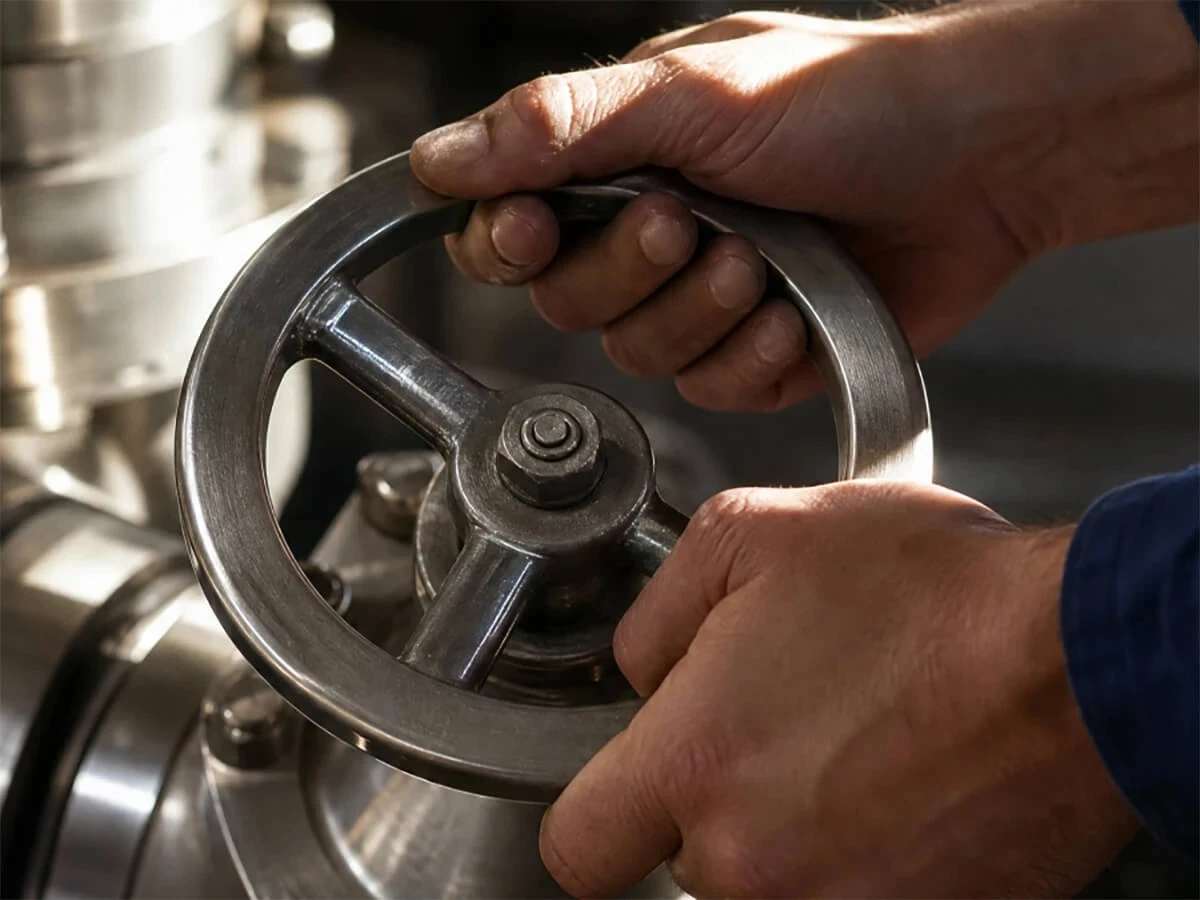
All these examples have something critical in common: the AI isn't valuable simply because it can generate an answer. It's valuable because the answer is connected to real work.
From AI Assistance to AI Action
Industrial AI is also evolving. The first generation of workplace AI largely focused on answering questions and generating content. The next generation can help people interpret information, make decisions, and complete workflows.
Assist

Recommend
Prepare
Act
At the first stage, AI helps a worker find information. Then it can recommend what to do. It can prepare a response, workflow, or task. And, with appropriate controls, AI Agents can eventually take defined actions on behalf of people.
As AI moves closer to action, the requirements for grounding, permissions, traceability, and human oversight become even more important – that’s why industrial AI isn't simply about adding increasingly powerful models to industrial software. It's about creating a trusted system in which AI can safely become part of how industrial work gets done.
Ready to explore industrial AI? Learn how organizations are using AI to connect operational knowledge, frontline work, and intelligent action with Poka.
Frequently Asked Questions
Make every shift your best shift with Poka AI
AI assistants embedded in the flow of work drive a 14% average productivity gain, and 35% for newer workers.
- AI assistants embedded in the flow of work
- 77% reduction in work instruction creation time
- Create content 77% faster, and scale 630% more
- Make every shift your best shift with AI-powered support
- Proven results, backed by measurable performance data
Poka has quickly become part of our daily operations and is helping to capture best practices in a centralized, easy-to-access knowledge base.
Head of Manufacturing IT