The Ultimate Guide to Industrial AI in Manufacturing

Connected Workforce Manufacturing Excellence Industry Trends

Everything You Need to Know About Industrial AI in Manufacturing

Artificial intelligence is no longer a future ambition for manufacturers — it is already reshaping how work gets done on the factory floor. From improving decision-making to accelerating problem-solving and enabling more resilient operations, Industrial AI is becoming a core pillar of modern manufacturing strategies with connected workers.

This guide provides a comprehensive deep dive into Industrial AI in manufacturing. It explores what Industrial AI is, how it has evolved, the use cases delivering value today and how emerging approaches like Agentic AI will shape the future of human-machine collaboration on the factory floor.
POKA avr 28 2022 Vivien Gaumand 109 2 1

Achieve an AI Advantage in Manufacturing

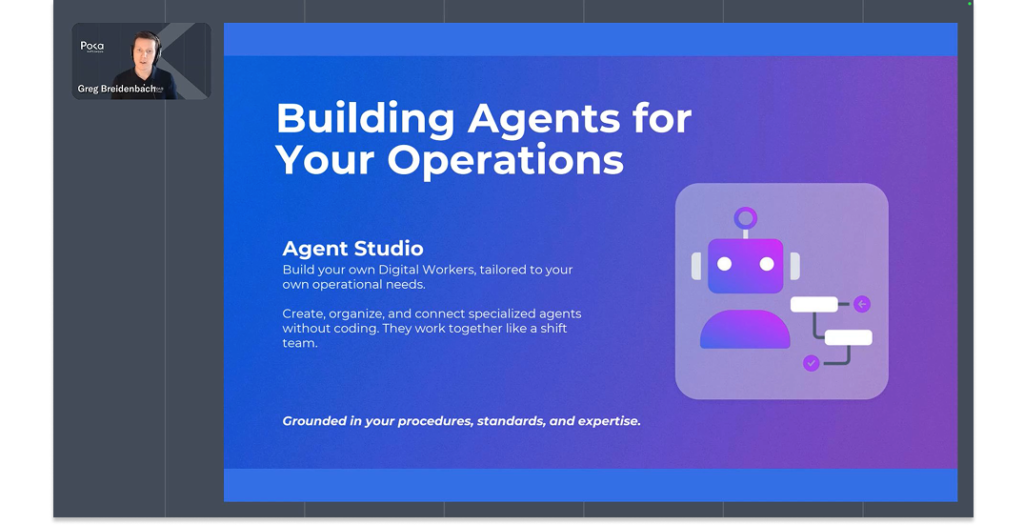
Watch this on-demand webinar to explore how the next generation of AI-augmented connected workers will collaborate seamlessly with intelligent assistants and autonomous agents — tools capable of understanding context, learning from operations, and taking action alongside frontline teams.

AI Webinar screenshot 1

Table of Contents

1. What is Industrial AI?

2. What to Look for in an Industrial AI Solution

3. Top Use Cases of Industrial AI in Manufacturing

4. Selecting the Right Industrial AI Solution

5. Where to Start with Industrial AI

6. Next Steps in Your AI Journey

7. Additional Industrial AI Resources

8. Frequently Asked Questions About Industrial AI

Part 1

1. What Is Industrial AI?

Industrial AI refers to the application of artificial intelligence technologies — including machine learning, generative AI and autonomous AI agents — within industrial environments to augment human decision-making, optimize operations and improve factory-floor performance.

Poka Assistant2025
Part 2

2. What to Look for in an Industrial AI Solution

Industrial AI has enormous potential to improve manufacturing performance, but value is not guaranteed simply by adding AI to existing systems. In practice, many AI initiatives fail to scale because they are disconnected from real work, difficult to trust or misaligned with the realities of the factory floor.

To deliver sustainable value, an Industrial AI solution must be designed specifically for manufacturing environments and frontline users. The right solution should meet the following criteria.

Food and beverage worker autonomous training

Achieve an AI Advantage in Manufacturing

Watch this on-demand webinar to explore how the next generation of AI-augmented connected workers will collaborate seamlessly with intelligent assistants and autonomous agents — tools capable of understanding context, learning from operations, and taking action alongside frontline teams.

AI Webinar screenshot 1
Part 4

4. Selecting the Right Industrial AI Solution

Selecting the right Industrial AI solution is a strategic decision that will influence not only operational performance, but also how artificial intelligence is perceived, trusted and adopted across the organization. A well-chosen solution can accelerate improvement and empower frontline teams, while a poor fit can reinforce skepticism and stall future innovation.

To make an informed choice, manufacturers should take a structured approach that balances business needs, workforce realities and long-term scalability.

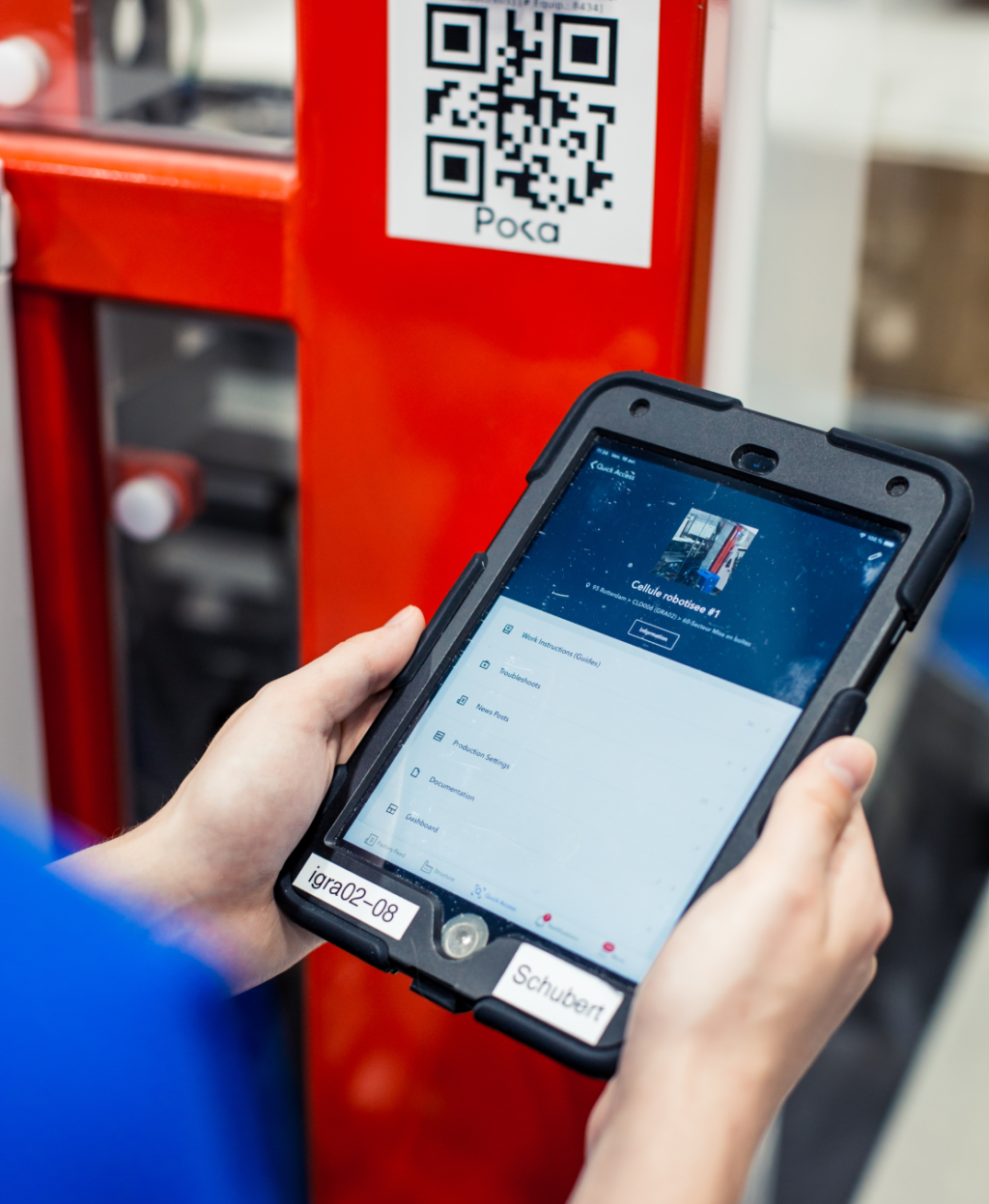
Poka tablet with qrcode 555x676
Part 5

5. Where to Start with Industrial AI

One of the most common pitfalls manufacturers encounter with Industrial AI is attempting to apply it everywhere at once. While the technology is powerful, unfocused deployments often lead to stalled initiatives, limited adoption and skepticism on the factory floor. A successful Industrial AI journey starts with focus, clarity and a strong foundation of trust.

Poka Soprema 1920x1080
Part 6

6. Conclusion: Next Steps in Your Industrial AI Journey

Industrial AI is becoming essential for manufacturers navigating Industry 5.0. The future belongs to organizations that pair human expertise with intelligent digital co-workers, creating safer, more productive, and more resilient operations.

By starting with the right use cases and the right mindset, manufacturers can build trust, unlock value, and lead the next era of industrial performance.

Image 25

Achieve an AI Advantage in Manufacturing

Watch this on-demand webinar to explore how the next generation of AI-augmented connected workers will collaborate seamlessly with intelligent assistants and autonomous agents — tools capable of understanding context, learning from operations, and taking action alongside frontline teams.

AI Webinar screenshot 1

8. Frequently Asked Questions About Industrial AI

Industrial AI refers to the use of artificial intelligence technologies—such as machine learning, generative AI, and AI agents—to improve decision-making, productivity, and performance in industrial environments. Unlike traditional automation, Industrial AI focuses on augmenting human expertise by analyzing data, identifying patterns, and supporting workers directly on the factory floor.

Traditional automation executes predefined rules and repetitive tasks, while Industrial AI introduces intelligence and adaptability. Industrial AI can learn from data, reason about context, and support human judgment in dynamic situations, making it better suited for complex manufacturing environments where variability is common.

Common AI in manufacturing use cases include troubleshooting assistance, predictive maintenance, quality monitoring, safety risk identification, knowledge management, and training support. Increasingly, manufacturers are also using AI to automate reporting and surface early warnings that help prevent downtime or defects.

Agentic AI refers to autonomous, goal-driven AI systems that can perceive their environment, coordinate tools, and recommend or initiate actions—while remaining under human oversight. In manufacturing, Agentic AI acts as a digital co-worker, proactively supporting workers rather than waiting for instructions.

No. Industrial AI is designed to augment, not replace, factory workers. Its primary role is to reduce cognitive load, handle repetitive background tasks, and surface insights that help workers perform their jobs more safely, efficiently, and confidently.

Human-in-the-loop AI means that while AI systems can analyze situations and propose actions, humans retain final decision-making authority. This approach is critical in manufacturing to ensure safety, accountability, and trust while still benefiting from AI-driven insights.

Manufacturers should start by identifying high-impact, low-risk use cases such as knowledge conversion, troubleshooting assistance, or reporting automation. Beginning with a focused business value assessment helps organizations build confidence and demonstrate value before scaling AI more broadly.

Industrial AI relies on a combination of structured data (such as production metrics or maintenance records) and unstructured data (such as work instructions, issues, and observations). Contextual data—like equipment, location, and role—is especially important for delivering relevant, actionable insights.

When deployed thoughtfully, many manufacturers see measurable value from Industrial AI within weeks. Starting with targeted use cases allows organizations to realize quick wins while laying the groundwork for more advanced applications like Agentic AI.

Manufacturers should look for solutions that are manufacturing-first, human-centric, and embedded into daily workflows. Key considerations include ease of use, explainability, integration with existing systems, enterprise-grade security, and the ability to scale across multiple plants and regions.

Want to Bring AI to Your Factory Floor?